



When purchasing group life insurance, it’s crucial to consider not just your own needs but those of your loved ones as well. That’s where basic dependent life insurance in Canada comes in. Basic dependent life insurance is a flat-amount, guaranteed-issue death benefit covering an employee’s spouse or common-law partner and dependent children under a Canadian workplace group plan.
Coverage amounts are set by the plan, with a specific benefit for a spouse and often a smaller amount for each child. You can typically sign up when you first join the company or after a major life change, like getting married or having a child. There is usually an enrolment period of up to 60 days following such an event.
While this basic coverage is a valuable feature of many benefits packages, it leads many employees to ask an important question: Is it actually enough? The primary purpose of this insurance is to help cover immediate expenses, such as funeral costs, not to replace a lifetime of income.
What is Basic Dependent Life Insurance in a Canadian Group Plan?
Basic dependent life insurance is a guaranteed-issue, flat-amount group life benefit that pays a lump sum to the employee if a covered spouse, common-law partner, or dependent child dies.

When you enroll in a Canadian group benefits plan through your employer, you’re often getting a package of several different coverages, including employee basic life insurance, accidental death and dismemberment (AD&D), extended health, and dental. Within this bundle, basic dependent life covers a distinct risk: it is a type of group life insurance that provides a death benefit to the employee (who is the beneficiary) if a covered dependent passes away, unlike regular life insurance, which pays out upon the policyholder’s death.
The word “basic” signals that this is a foundational tier of coverage. This means it provides a set dollar amount, is “guaranteed-issue” (so no medical evidence is required for approval), and the premiums are typically funded by the employer or are cost-shared.
How Much Coverage Does Basic Dependent Life Insurance Provide for Spouses and Children?
Basic dependent life insurance provides a flat dollar amount to help employees manage the financial impact of a dependent’s passing. Coverage amounts are set by the plan sponsor and insurer, not by legislation, so they vary across employers and industries.
The table below summarizes the most common basic dependent life tiers found in Canadian group plans (Source).
| Coverage Tier | Spouse/Common-Law Partner | Dependent Child |
| Standard | $5,000 | $2,500 |
| Enhanced | $10,000 | $5,000 |
| Federal PSMIP | $5,000 | $2,500 |
These benefit amounts are flat, meaning every eligible employee receives the same coverage regardless of their salary, age, or the number of dependents they enroll. The coverage is applied individually to each eligible child.
While some plans may offer slightly different figures, these two tiers represent the most common foundational coverage amounts provided for spouses and children in Canada.
What Are the Qualifying Events for Dependent Enrolment Eligibility?
Adding a dependent to a life insurance plan can only happen during specific windows, known as qualifying life events.
It’s crucial to enroll on time because failing to do so makes an employee a late applicant. This means their dependents may need to answer health questions or undergo a medical review to be approved for coverage.
While specific rules can vary by plan, this enrolment window generally includes events like your initial eligibility after hiring, a marriage or new common-law partnership, the arrival of a new child, or a dependent’s loss of other insurance coverage.
Understanding these key triggers is the foundation of securing protection for one’s family:
Initial Eligibility After Hiring
An employee’s first and best chance to enrol dependents is when they first become eligible for benefits, typically after a waiting period of one to three months.
For 31 days (though some plans offer up to 60 days), coverage is offered on a guaranteed-issue basis, a provision that waives all medical screening for dependents.
This means no medical questions are asked, and approval is automatic for eligible dependents. If an employee skips this opportunity, they lose the guaranteed-issue privilege for those dependents.
Marriage or Common-Law Partnership
An employee may enrol a new spouse following a marriage or after establishing a common-law relationship. This life event creates a 31-day enrolment opportunity.
- For married couples, the clock starts on the wedding date.
- For common-law partners, it begins once the plan’s cohabitation requirement is met, typically 12 continuous months of living together, though this varies by plan and provincial jurisdiction.
- For common-law status, the employee is responsible for tracking the cohabitation date and informing the plan administrator once the requirement is met.
The Arrival of a New Child
The arrival of a new child, whether by birth or through legal adoption, is a significant life event that also serves as a special opportunity for benefits enrolment. This event opens a 31-day window for an employee to add their new dependent to the plan.
Crucially, the plan is designed to provide immediate peace of mind. As long as the enrolment is completed within this 31-day timeframe, the child’s coverage is made retroactive, meaning it is backdated to their actual date of birth or the date the adoption was finalized. This feature ensures there is no gap in protection. It guarantees that the newest member of the family is covered from their very first day, which is vital during a time filled with new adjustments and responsibilities.
Loss of Other Insurance Coverage
An enrolment window also opens when a dependent involuntarily loses their insurance coverage from another plan. This frequently occurs when a spouse experiences a job change or when a child reaches the age limit on another parent’s policy. Upon this loss, a new 31-day enrolment period is granted to the employee to add that dependent to their own plan.
Since the window starts on the date the coverage is lost, not when notice is received, it’s wise for employees to contact their administrator as soon as they know a change is coming.
If employees miss the 31-day window, they are considered a late applicant. The guarantee of approval is lost, and the insurer can then ask for medical information and may deny coverage based on the dependent’s health.
When Basic Dependent Coverage Is Enough and When It Is Not?
The answer depends entirely on your family’s financial situation. Basic dependent life insurance is adequate help with immediate costs, like a funeral, for a dependent who does not contribute to the household income or carry significant debt. On the other hand, it is insufficient when the dependent contributes income, carries debt, or when funeral costs exceed the benefit amount.
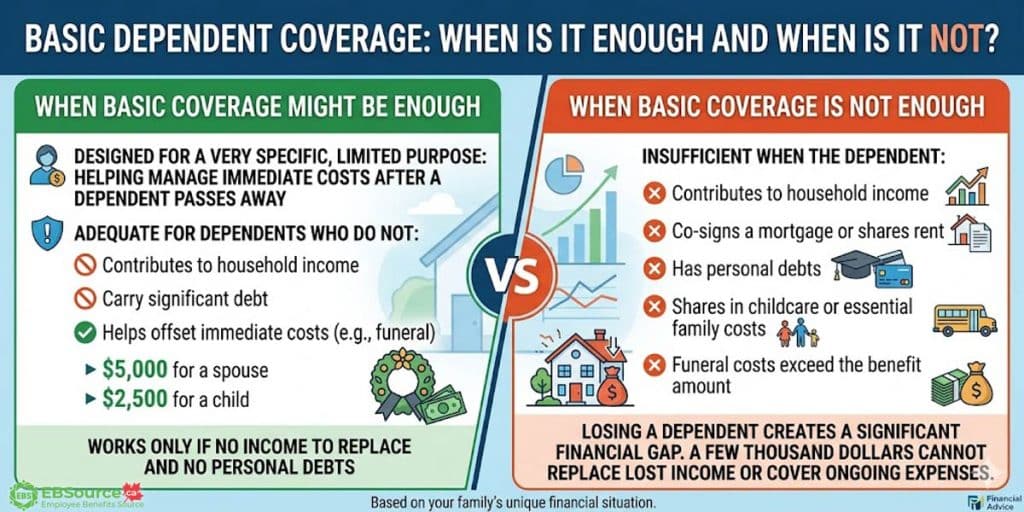
Let’s take a closer look at when this coverage is enough, and when it is not:
When Basic Coverage Might Be Enough
Basic dependent coverage is designed for a very specific, limited purpose: helping your family manage immediate costs after a dependent passes away. This coverage generally makes sense only when that dependent has no income to replace and no personal debts to settle.
In this case, for example, a $5,000 benefit for a spouse or a $2,500 benefit for a child can help offset the most immediate costs without leaving a significant shortfall.
When Basic Coverage Is Not Enough
For most modern families, the basic amount is insufficient. This is especially true if your spouse or partner:
- Contributes to the household income.
- Co-signs a mortgage or shares rent payments.
- Has personal debts, such as student loans or credit cards.
- Shares in childcare or other essential family costs.
In these common situations, the loss of a dependent creates a significant financial gap. That said, a benefit of $5,000 or even $10,000, while helpful, cannot replace lost income or cover ongoing living expenses.
How to Determine Your Actual Need
The best approach is to treat the basic benefit as a starting point. From there, you can estimate your family’s potential expenses, subtract the amount provided by your Basic Dependent Life Insurance, and identify any remaining financial gap to see what additional coverage your family might need.
Here are three simple steps to help assess your coverage needs:
- Estimate the Costs: Add up the potential expenses your family would face, including funeral costs, immediate debts, and a buffer for lost income during bereavement.
- Subtract Your Benefit: Subtract the amount your basic dependent life insurance would provide.
- Identify the Gap: The remaining amount is the financial gap you need to fill with optional group coverage or a separate individual life insurance policy.
Ultimately, basic dependent life insurance is a valuable floor, but it’s not the ceiling. It provides a foundational benefit that signals an employer’s care, but it is the employee’s responsibility to build upon it to ensure their family is truly protected.
Basic Dependent Life Insurance Checklist for Employers and Employees
When it comes to group benefits, the fine print matters, especially for something as important as Basic Dependent Life Insurance.
Both employers and employees should verify specific items in the plan certificate to avoid surprises at claim time. A few minutes of review at the outset can prevent costly misunderstandings when a claim is filed months or years later.
Here’s a checklist for both employers and employees to ensure clarity and avoid surprises.
A Checklist for Employers
Employers designing or reviewing a group plan should confirm the following items before binding coverage:
- Confirm the basic dependent coverage amounts for spouse and child in the plan certificate
- Verify the dependent definition matches your workforce demographics (common-law, same-sex partners)
- Clarify the employer-paid vs. employee-paid premium split and taxable benefit implications
- Ensure the plan includes a conversion privilege compliant with CLHIA Guideline G3
- Confirm the enrolment window length (31 or 60 days) and late-applicant evidence requirements
A Checklist for Employees
Employees enrolling in or reviewing their existing coverage should verify the following details in their plan certificate or benefits booklet:
- If the basic amount seems too low, ask your HR department about purchasing “optional” or “voluntary” dependent life insurance to increase your coverage.
- Find the exact dollar amount of coverage provided for your spouse and for each child in your benefits booklet.
- Be aware of the deadline (usually 31 days) to add a new spouse or child to your plan after a life event like marriage, a new common-law relationship, or birth.
- If your employer pays the premium, this is considered a taxable benefit. Look for it on your pay stub and T4 slip to understand its impact.
- Compare the basic benefit amount to the realistic costs of a funeral and other final expenses. Will it be sufficient for your family?
Frequently Asked Questions about Basic Dependent Life Insurance
What is the difference between basic and supplemental dependent life insurance?
Basic dependent life insurance is a guaranteed amount of coverage provided at low or no cost by your employer. Supplemental coverage refers to optional additional amounts of insurance purchased in excess of the basic benefits.
Does basic dependent life insurance require a medical exam?
No, basic dependent coverage up to guaranteed issue amounts does not require proof of good health or medical exams. Only supplemental amounts may necessitate health screening.
When can basic dependent life insurance be converted?
Most group term life insurance plans allow conversion to an individual permanent life policy if dependent coverage terminates, such as due to employee termination or divorce. Time limits apply, such as 31 days from termination date.
Do basic amounts decrease with dependent age?
Some plans may reduce basic spouse life insurance amounts at ages 70 or 75. Child coverage typically remains level until the maximum eligibility age stated in the policy terms.
Is it better to buy dependent life insurance individually?
Basic dependent life insurance offers guaranteed coverage with no health screening, at little or no cost. For higher benefit amounts, buying supplemental coverage through work or individual policies may provide better value.