


Canadian small and medium-sized enterprises (SMEs) frequently struggle to compete with larger companies, which often offer better pay and benefits. However, small businesses can use voluntary benefits, or optional benefits, to attract and retain talent.
Voluntary benefits are supplemental coverage options that employers can offer alongside core group benefits, ranging from critical illness coverage to niche perks like pet insurance. Offering these add-ons at negotiated group rates can help small employers improve hiring efforts, increase employee loyalty, satisfaction, and productivity, and expand the total rewards package at a low cost to the company.

The following sections will explain why small businesses should provide voluntary benefits.
On this page
How Voluntary Benefits Give Small Businesses a Recruitment Edge?
In a tight labour market, a strong benefits package can be the deciding factor for a candidate, as today’s job seekers often weigh benefits as heavily as base salary. This dynamic is especially relevant given that, in Canada’s provincial healthcare system, coverage for prescription drugs (outside hospitals), dental care, and vision care can be limited or program-specific by province/territory. This means employee may still face out-of-pocket expenses depending on where they live and their situation. Thus, an employer that facilitates access to affordable group coverage rates becomes instantly more attractive.
Adding voluntary options like group critical illness insurance, supplemental dental coverage, or a wellness spending account helps small companies compete for talent with larger competitors and signal a commitment to employee well-being. Even one or two well-chosen voluntary options can tip the scales when a candidate chooses between two otherwise equal offers.
Pro tip: Be Specific in Your Job Postings
Uncertain promises of “competitive benefits” are ineffective. To capture the attention of high-quality applicants, explicitly list your offerings, for example: “access to pet insurance,” “group rates on critical illness coverage,” or a “company-funded health spending account.”
How Voluntary Benefits Strengthen Employee Retention?
Voluntary benefits increase employee retention by providing concrete financial incentives through exclusive group rates and by nurturing an emotional connection through employer care.
These practical and emotional drivers are key to long-term retention:
- The practical incentive: When an employee enrolls in a voluntary employer-sponsored insurance plan, they gain access to group rates that are typically unavailable on the individual market. This benefit encourages employees to stay with the company, as leaving means that they would lose that preferential rate.
- The emotional connection: The act of vetting, negotiating and administering these benefits sends a powerful message that the employer cares about its staff’s financial and physical well-being. This develops a sense of loyalty and appreciation even when the employee pays the full premium.
How Voluntary Benefits Improve Employee Productivity and Satisfaction?
An effective voluntary benefit program boosts workplace performance by providing a financial safety net for emergencies, boosting morale through customized well-being resources, and offering personalized options for a diverse workforce. When staff feel secure and supported, they are more focused, engaged and less susceptible to absenteeism.
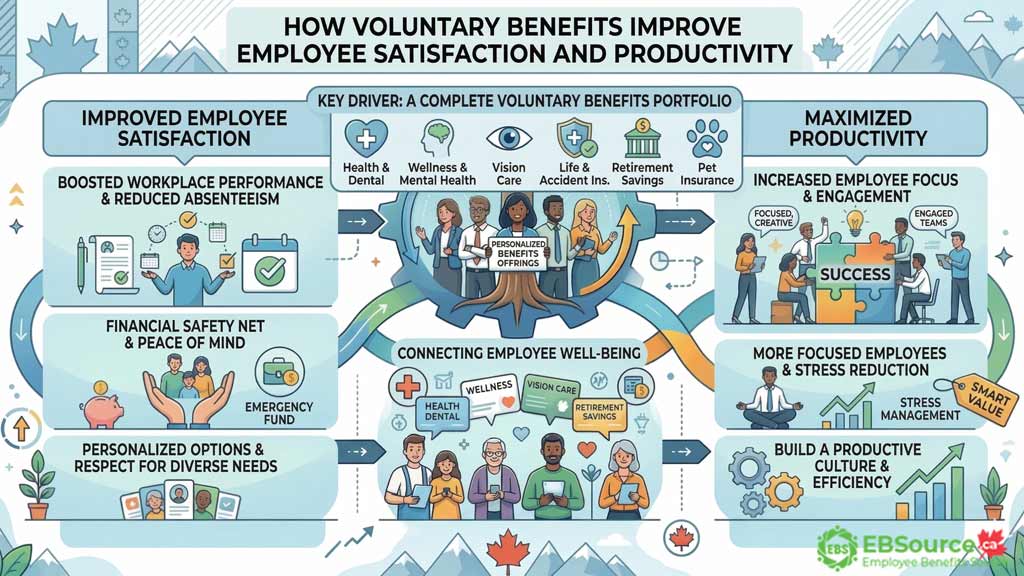
Here is how optional benefits specifically impact satisfaction and productivity:
Providing a Fiscal Safety Net
Financial anxiety is a major cause of disengagement. Voluntary policies, such as critical illness, hospital indemnity or accident insurance, provide a lump-sum payment that can prevent a sudden medical event from becoming a financial crisis. This peace of mind allows employees to concentrate fully on their work rather than worrying about unexpected costs, thereby significantly reducing presenteeism (being at work but not productive).
Boosting Morale and Engagement
Offering optional benefits that aid mental and physical health sends a message that the employer cares about the individual, not just the output. Perks such as flexible spending accounts and supplemental mental health coverage contribute to a healthier, stronger workforce. When employees have access to resources that protect their general well-being, they show decreased stress levels, reduced absenteeism and higher daily engagement.
Personalization for a Diverse Workforce
A multi-generational workforce has diverse needs that a “one-size-fits-all” plan cannot meet. Voluntary benefits tailored to different needs empower employees to choose the coverage that fits their life stage.
For example, a younger employee might prioritize a Wellness Spending Account for a gym membership, while an older employee may value supplemental health insurance. This shows that the employer respects their employees as individuals, helping businesses with employees spanning multiple age groups boost enrollment and ensure that every team member finds genuine value in the program.
Research also supports the connection between voluntary benefits and employee engagement. Statistics Canada survey results show “salary and benefits” rank as a top job attribute valued by employees. A 2025 report from the Employee Benefit Research Institute (EBRI) (U.S.) found that 85 percent of organizations report a positive impact on employee satisfaction from their benefits programs, and nearly three-quarters also report a positive impact on recruiting, retention, and employee performance.
How Voluntary Benefits Help SMEs Control Costs While Expanding Offering?
Small businesses can enhance their total rewards package with minimal direct cost by acting as the administrative facilitator for employee-paid premiums and leveraging favourable Canadian tax treatments.
The core cost-control mechanism is simple: the employer’s role is primarily administrative, negotiating with a provider and setting up payroll deductions. This allows a business to expand its benefits package without incurring the significant financial burden of rising group health insurance premiums. Voluntary benefits keep the cost low for the employers but allow employees to purchase valuable coverage at group rates.
Canadian employers also benefit from favourable tax treatment on certain group benefit premiums. Employer contributions to a Private Health Services Plan (PHSP), such as medical or dental plans, are generally not taxable for employees (when PHSP conditions are met). However, note that Quebec may treat employer-paid group insurance contributions (including certain PHSP arrangements) as a taxable benefit.
Additionally, these contributions are considered a tax-deductible business expense for employers. While most voluntary benefits are employee-paid, if an employer chooses to contribute, these tax rules provide an additional financial incentive.
Source: Premiums and contributions to insurance plans – canada.ca
Note: Keep in mind that the key constraint for small business owners is the administrative effort required for tasks like payroll deduction setup, carrier communication, and annual enrolment. The expenses can vary based on what they offer and how they offer it. For some voluntary benefits, they may pay administrative fees and minor additional costs, such as the time HR staff spend educating employees about the offering.
Tips for Implementing a Successful Voluntary Benefits Program
Launching a benefits program requires you to understand the needs of your team, consult with licensed advisors to manage the market, be strategic, and maintain clear, consistent communication.
These 4 tips will ensure your benefits program is both effective and well-received:
- Know Your Employees: Before choosing products, ask your team about their biggest concerns via an anonymous survey. Understanding whether they prioritize dental costs, mental health, or flexibility ensures you choose the right products.
- Consult a Benefits Advisor: A licensed broker can help you compare quotes, select products that fit your budget, and ensure compliance with provincial and federal regulations. This simplifies the complex world of group insurance for the business owner.
- Start Small and Be Strategic: You do not need to offer everything at once; a combination of an HSA, WSA, and EAP is often the best starting point.
- Communicate Clearly and Often: The program’s success depends on employee uptake. During enrolment and throughout the year, communicate clearly what is available, what it covers, and how to use it, to ensure employees understand the value you are providing.
A favoured employee experience is about the quality of your strategy, not just the size of your balance sheet. Start small, listen to your team’s needs, and turn your benefits package into your company’s greatest competitive advantage.
FAQs about Why Voluntary Benefits Matter
If employees pay 100% of the premium, what is the “benefit”?
The value lies in exclusive access and pricing. By sponsoring a voluntary plan, you give your team group rates that are typically cheaper than individual plans.
Does providing voluntary benefits create extra paperwork?
Many providers offer digital enrollment and payroll-file workflows, which can reduce admin time. However, most employers still need to handle ongoing tasks like eligibility changes, terminations, payroll reconciliation, and annual enrollment.
What happens if an employee leaves the company?
It depends on the policy. Some voluntary plans allow employees to continue coverage after leaving by converting to individual billing, but terms, timelines, and eligibility vary.